



Did you know that retirees in Ohio face some of the most complex local and federal tax requirements in the country? If you live in Akron, staying ahead of tax season means understanding how different types of retirement income, city filings, and senior deductions affect your bottom line. Taking the right steps now can help you avoid costly errors, make the most of credits, and maintain your financial peace of mind throughout retirement.
1. Know Your Retirement Income Sources for Accurate Reporting
As a retiree in Akron, understanding and accurately reporting your diverse retirement income sources is crucial for smooth tax preparation. Navigating the complex world of retirement income reporting can feel overwhelming, but with the right knowledge, you can confidently manage your tax responsibilities.
The IRS recognizes multiple retirement income types that require specific reporting methods. These income sources typically include:
- Social Security benefits
- Pension payments
- Individual Retirement Account (IRA) distributions
- Annuity payments
- Retirement account withdrawals
According to the IRS guidance, each income type has unique tax implications that demand precise reporting. For instance, Social Security benefits might be partially taxable depending on your total income, while traditional IRA withdrawals are generally taxed as ordinary income.
To simplify this process, the IRS provides valuable resources like the Interactive Tax Assistant and detailed publications such as Publication 590B and Publication 915. These tools help retirees understand how to calculate and report different income streams accurately.
Practically speaking, you should gather all your year end tax documents like 1099 forms from pension providers, retirement account administrators, and Social Security. Organize these documents early to streamline your tax preparation and reduce potential errors. Keep detailed records of each income source, noting the exact amount and type of distribution.
Pro Tip: Consulting with a local tax professional who understands Akron’s specific tax landscape can provide personalized guidance for your unique retirement income situation.
By proactively understanding your retirement income sources and their tax treatment, you can minimize surprises and potential IRS complications while ensuring you pay exactly what you owe no more, no less.
2. Understand Tax Implications of Social Security Benefits
Navigating the tax landscape of Social Security benefits can be complex for retirees in Akron and Summit County. While many assume these benefits are completely tax free, the reality is more nuanced and requires careful understanding to avoid unexpected tax bills.
Social Security benefits are not always tax exempt, and your total income determines how much will be taxable. Essentially, the IRS calculates your tax liability based on your combined income, which includes:
- Half of your annual Social Security benefits
- Other taxable income sources
- Some nontaxable income
The taxation threshold depends on your filing status and total income. Single filers might start paying taxes on Social Security benefits if their combined income exceeds $25,000 annually. For married couples filing jointly, this threshold increases to $32,000.
Our comprehensive guide on retirement income tax filing can help you understand these nuanced calculations. Strategically managing your additional income sources can help minimize the tax impact on your Social Security benefits.
Practical Tips for Managing Social Security Tax Liability
To reduce your potential tax burden, consider these strategies:
- Manage withdrawals from retirement accounts carefully
- Explore tax efficient income strategies
- Consider partial Roth conversions
- Time your income to stay below taxation thresholds
Pro Tip: Consulting with a local tax professional who understands Ohio specific regulations can provide personalized guidance tailored to your unique financial situation.
By understanding these tax implications, you can make informed decisions that help preserve more of your hard earned Social Security benefits while remaining compliant with IRS regulations.
3. Take Advantage of Senior-Specific Tax Credits and Deductions
As a retiree in Akron, you have access to several valuable tax credits and deductions specifically designed to support seniors and reduce your overall tax burden. Understanding and leveraging these opportunities can significantly impact your financial health.
Senior tax benefits are not automatic they require proactive identification and strategic planning. Read our expert guide on tax preparation for seniors to maximize your potential savings.
Key Tax Benefits for Seniors Include:
- Higher standard deduction for those over 65
- Credit for the elderly or disabled
- Medical expense deductions
- Retirement account contribution credits
- Property tax relief for senior homeowners
The additional standard deduction is particularly beneficial. If you are single or filing as head of household and are 65 or older, you can claim an extra standard deduction amount beyond the standard rate. For married couples filing jointly, both spouses over 65 receive an increased deduction.
Medical expense deductions offer another significant opportunity. You can deduct medical expenses that exceed 7.5% of your adjusted gross income. This includes expenses for doctors, prescription medications, medical equipment, and even certain travel costs related to medical care.
Pro Tip: Keep meticulous records of all medical expenses throughout the year to maximize your potential deductions.
To take full advantage of these benefits, gather comprehensive documentation of your medical expenses, retirement income, and other qualifying expenditures. Consider consulting with a local tax professional who understands Akron specific regulations and can provide personalized guidance tailored to your unique financial situation.
By understanding and strategically applying these senior specific tax credits and deductions, you can potentially reduce your tax liability and keep more of your hard earned money.
4. Plan Required Minimum Distributions to Avoid Penalties
Navigating Required Minimum Distributions (RMDs) can be a complex aspect of retirement financial planning that demands careful attention. Missing or miscalculating these mandatory withdrawals can result in significant IRS penalties that could substantially impact your retirement savings.
According to recent reporting from AP News, retirees age 73 and older must now begin taking RMDs from their retirement accounts. Important RMD Considerations:
- First RMD can be delayed until April 1 following your 73rd birthday
- Delaying the first RMD might create two taxable distributions in one year
- Penalties for non compliance can reach up to 25% of the undistributed amount
Strategies to Manage RMDs Effectively:
- Calculate your RMD amount precisely using IRS worksheets
- Consider Qualified Charitable Distributions (QCDs)
- Explore Roth conversion opportunities
- Coordinate RMDs with overall tax planning
A key strategy many Akron retirees overlook is the Qualified Charitable Distribution (QCD). This approach allows you to donate up to $100,000 directly from your IRA to a qualified charity, which can help satisfy your RMD while potentially reducing your taxable income.
Pro Tip: Work with a local tax professional who can help you time and structure your RMDs for maximum tax efficiency.
By proactively planning your Required Minimum Distributions, you can minimize tax liabilities and avoid costly penalties. Understanding the nuances of RMD rules is crucial for maintaining your financial health during retirement.
5. Organize Medical and Charitable Expenses for Maximum Deductions
Maximizing tax deductions through strategic management of medical and charitable expenses can significantly reduce your tax liability during retirement. Understanding the nuanced rules surrounding these deductions is crucial for Akron retirees looking to optimize their financial planning.
Learn more about smart recordkeeping strategies that can help you track and document your expenses effectively. Medical expense deductions require careful documentation and strategic planning.
Key Considerations for Medical Expense Deductions:
- Expenses must exceed 7.5% of your adjusted gross income
- Include costs for doctors, medications, medical equipment
- Transportation related to medical care can be deductible
- Keep detailed receipts and documentation
Charitable contributions offer another powerful tax planning tool. Qualified Charitable Distributions (QCDs) provide a unique opportunity to support causes you care about while potentially reducing your tax burden. According to Nasdaq reporting, QCDs can help satisfy Required Minimum Distributions without increasing your gross income.
Strategies for Charitable Giving:
- Donate directly from retirement accounts
- Consider bunching charitable contributions
- Explore donor advised funds
- Maintain thorough documentation of all contributions
Pro Tip: Maintain a dedicated folder for medical and charitable expense receipts throughout the year to simplify tax preparation.
By meticulously tracking and strategically planning your medical and charitable expenses, you can potentially reduce your taxable income while supporting important causes and managing your healthcare costs. Consulting with a local tax professional can help you navigate these complex deduction opportunities specific to Akron and Summit County regulations.
6. Consult Local Tax Laws for Ohio and Akron City Filings
Navigating the complex landscape of local tax regulations can be challenging for retirees in Akron and Summit County. Understanding the nuanced differences between federal, state, and city tax requirements is crucial to ensuring accurate and compliant tax filings.
Explore our comprehensive local tax services to help you manage these intricate filing requirements. Ohio tax laws have specific provisions that can impact retiree tax obligations in ways that differ from federal regulations.
Key Local Tax Considerations for Akron Retirees:
- Ohio has a graduated state income tax system
- Akron city taxes require separate municipal filing
- Retirement income may be treated differently at state and local levels
- Property tax rules can vary by county and municipality
Municipal tax filing in Akron requires special attention. Unlike many cities, Akron has its own income tax system that operates alongside state and federal requirements. Resident taxpayers must file municipal returns even if they have no additional tax liability beyond federal and state filings.
Strategies for Local Tax Compliance:
- Maintain separate documentation for municipal filings
- Understand Akron specific tax credits
- Track local property tax relief programs
- Consider consulting a local tax professional familiar with Summit County regulations
Pro Tip: Local tax laws can change annually. Always verify current requirements with official Summit County and Akron municipal resources.
By proactively understanding and addressing local tax nuances, you can avoid potential penalties and optimize your tax strategy. A local tax professional who understands Akron and Ohio specific regulations can provide invaluable guidance tailored to your unique financial situation.
7. Seek Professional Help for Complex or Multi-State Returns
Tax preparation becomes increasingly complex as your financial landscape evolves, especially for retirees with multi state investments, retirement accounts, or income streams. Professional tax guidance can be the difference between accurate compliance and potentially costly mistakes.
Learn about the top advantages of hiring a professional tax preparer to understand how expert support can simplify your tax filing process. Complex tax situations often require specialized knowledge that goes beyond standard tax preparation.
Scenarios Warranting Professional Tax Assistance:
- Multiple state tax residencies
- Significant retirement account distributions
- Complex investment portfolios
- Rental property income
- Recent major life changes
- Inherited assets or estates
Benefits of Professional Tax Preparation:
- Minimize potential audit risks
- Maximize available deductions
- Navigate complicated tax law changes
- Provide personalized strategic tax planning
- Offer peace of mind and reduced stress
Retirees with income from multiple states face particularly challenging tax scenarios. Each state has unique tax regulations that can interact in complex ways, potentially creating unexpected tax liabilities or missed opportunities for savings.
Pro Tip: A local tax professional familiar with Ohio and Akron specific regulations can provide targeted guidance that generic online services cannot match.
By investing in professional tax preparation, you protect yourself from potential errors while potentially uncovering tax saving strategies you might have overlooked. The right tax professional becomes a valuable financial partner in managing your retirement tax strategy.
This table summarizes the key concepts, strategies, and considerations for managing retirement income and tax planning as discussed in the article.
| Topic | Description | Key Considerations |
|---|---|---|
| Retirement Income Sources | Includes Social Security, pensions, IRA distributions, annuities, and withdrawals. | Each source has unique reporting methods and tax implications. |
| Social Security Taxes | Benefits may be taxable based on combined income. | Taxation thresholds depend on filing status ($25,000 for single, $32,000 for joint). |
| Senior Tax Benefits | Includes higher standard deductions, credits for elderly, and medical expense deductions. | Benefits are not automatic and require documentation and planning. |
| Required Minimum Distributions | Mandatory for retirees over age 73. | Penalties for non-compliance are severe; strategies include QCDs and careful calculation. |
| Medical and Charitable Deductions | Deductions for medical expenses and charitable contributions. | Expenses must exceed 7.5% of AGI; detailed recordkeeping is essential. |
| Local Tax Considerations | Differences in federal, state, and city requirements. | Akron has unique filing requirements; property tax rules vary. |
| Professional Tax Help | Useful for complex, multi-state tax situations. | Professionals minimize audit risks and maximize deductions. |
Need Local Tax Help Making Sense of Retirement Rules in Akron?
Trying to keep up with retirement income reporting, understanding Social Security tax rules, and maximizing every deduction can feel like a full-time job. If you are a retiree in Akron, you know that state, city, and federal filing requirements can quickly become overwhelming. Navigating everything from Required Minimum Distributions to local credits is not easy on your own. That is why our experienced team at APC 1040 delivers personalized and affordable tax preparation with a focus on retirees just like you.
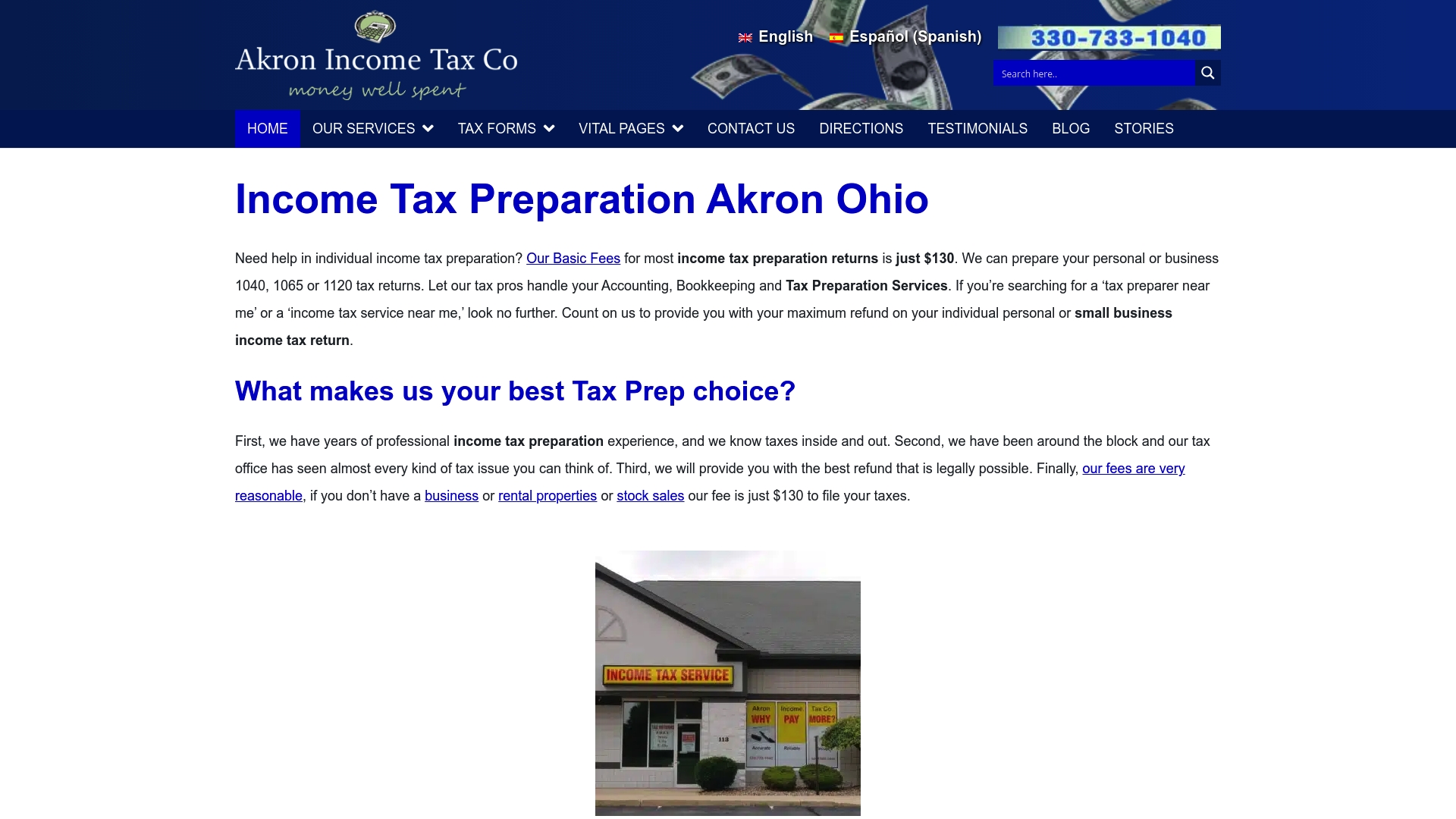

Our trusted advisors bring Akron-specific expertise to help you avoid IRS penalties, capture every senior tax benefit, and make sense of complex local filings. We have provided clear tax guidance and fixed-fee service since 1982, so you never pay unexpected costs. Ready to take control of your retirement taxes and feel secure this season? Visit our service page, connect with us for tailored support, and let a real local professional handle your next tax return. Make the most of every deduction this year with APC 1040.
FAQs
How do I determine if my Social Security benefits are taxable?
The taxability of Social Security benefits depends on your combined income, which includes half of your Social Security benefits and any other taxable income. If you’re a single filer with a combined income over $25,000, part of your benefits may be subject to tax. Calculate this threshold to anticipate any tax liability.
What tax-related deductions are available for seniors in my situation?
Seniors can take advantage of several tax credits and deductions, including a higher standard deduction and medical expense deductions if they exceed 7.5% of income. Review your medical expenses throughout the year and keep detailed records to maximize potential savings when filing your tax return.
How do I calculate my Required Minimum Distribution (RMD) accurately?
To calculate your RMD, use the IRS worksheets available for this purpose. This calculation will help ensure compliance and avoid IRS penalties, which can reach up to 25% of the undistributed amount. Start this process as soon as you turn 73 to stay informed about your financial needs.
What are the local tax considerations I need to be mindful of while filing?
Local taxes in Akron require a separate municipal filing, which is essential even if you don’t owe additional taxes beyond state and federal. Recognize that retirement income may be taxed differently at the local level, so track all income sources to ensure compliance and optimize your filings.
When should I seek professional help for my tax preparation?
Consider consulting a tax professional if you have complex financial situations, such as multiple state incomes or significant retirement account distributions. Their expertise will help you navigate tax laws and maximize deductions efficiently. Aim to schedule a consultation early in the tax season to ensure you’re well-prepared.